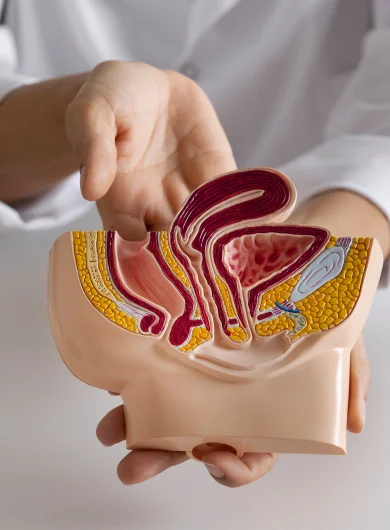
The Biological Clock: When we hear this term, most of us immediately associate it with women. But does the biological clock, in reality, concern only women?


On the other hand, well-known cases of men fathering children in their sixties and beyond have fostered the perception that male fertility has no age limit.
A Misconception?
Recent evidence shows that men are increasingly choosing to become fathers at older ages. While ovarian reserve is perhaps the single most important factor determining a couple’s monthly chance of achieving pregnancy, paternal age also plays a significant role in reproductive outcomes and should not be overlooked.
How does paternal age affect male fertility and the chances of natural conception? What impact does it have on the outcomes of in vitro fertilization (IVF), and what role might it play in the health of the children born?
Advanced paternal age has been associated with a longer time to achieve pregnancy and lower clinical pregnancy rates.
Data from a study involving 8,559 pregnancies showed that men over the age of 40 were approximately 30% less likely to achieve pregnancy with their partner within one year compared with younger men (Ford et al., 2000).
In addition, the frequency of sexual intercourse and overall sexual function are important factors influencing both the time to conception and the likelihood of achieving pregnancy. A large study conducted in Massachusetts found that the average frequency of sexual intercourse declined with advancing age, from approximately 6.5 times per month among men younger than 40 years to 3–2 times per month around the age of 50, and to 1–2 times per month by the age of 60.
Furthermore, men over the age of 40 have been reported to have an approximately threefold higher risk of developing ejaculatory dysfunction.
With regard to time to conception, research has shown that couples in which the male partner is over the age of 45 require approximately five times longer to achieve pregnancy than couples with a male partner younger than 25 years. Notably, this association was also observed when the female partner was younger than 25 years, suggesting an independent effect of paternal age on fertility.
What Exactly Changes as Men Get Older? Several biological and physiological changes occur with advancing paternal age that can affect reproductive potential. These include a gradual decline in semen quality, increased sperm DNA fragmentation, hormonal changes, the accumulation of genetic mutations in sperm cells, and a higher prevalence of chronic medical conditions and sexual dysfunction. Together, these factors can reduce the likelihood of natural conception, influence the outcomes of assisted reproductive treatment, and may affect the health of future offspring.
Changes in Semen Quality
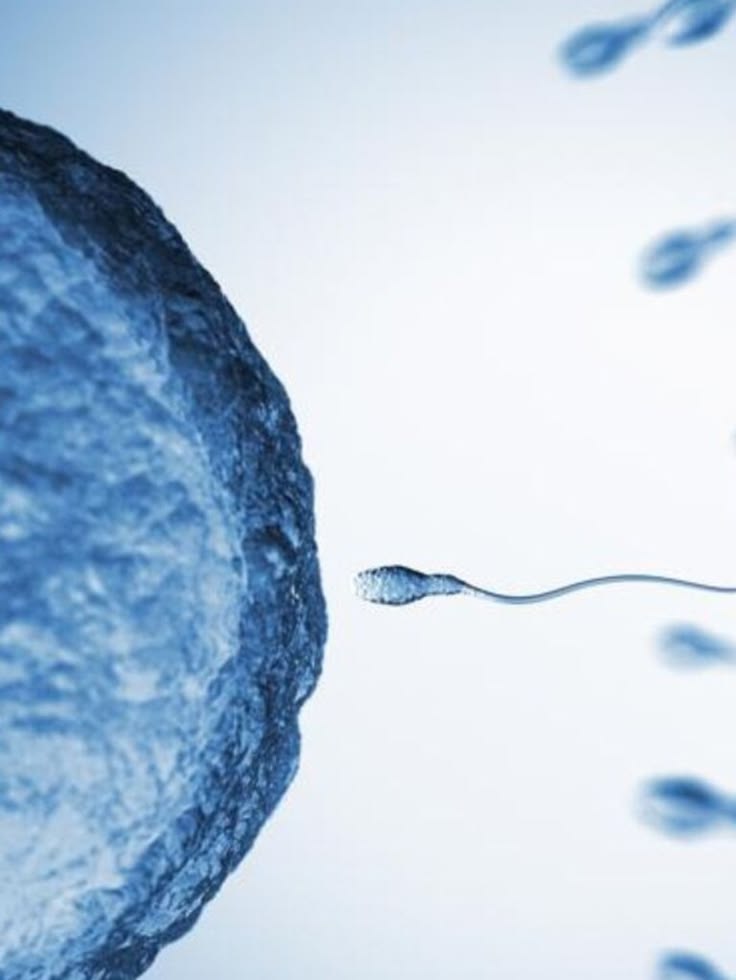
The impact of aging on prostate and epididymal function appears to be the primary factor contributing to the decline in sperm motility observed with advancing paternal age.
This decline ranges from 0.17% to 0.8% per year across different studies, corresponding to an overall reduction of approximately 3% to 16% over a 20-year period.
A similar decline is observed in sperm morphology, with the percentage of spermatozoa with normal morphology decreasing by 4%–18% over a 20-year period.
Semen volume and sperm concentration also appear to decline with advancing age. Approximately 90% of seminiferous tubules contain spermatids between the ages of 20 and 30, whereas this percentage decreases to around 50% between the ages of 40 and 50. Age-related reductions are also observed in other seminal fluid components. Levels of glycosidase, prostate-specific antigen (PSA), zinc, and fructose show a significant decline in men over 50 years of age compared with men aged 21–30, reflecting the reduced functional capacity of the accessory reproductive glands.
Sperm DNA Fragmentation Index (DFI)
Sperm DNA fragmentation has been associated with fertilization potential and reproductive outcomes. An increase in sperm DNA fragmentation has been observed with advancing paternal age. This is likely due to the age-related increase in oxidative stress, as well as the decline in the antioxidant capacity of the epididymis over time.
Health and Environment
With advancing age, the likelihood of developing health conditions increases, as does cumulative exposure to environmental toxins.
Viral orchitis, as well as exposure to sexually transmitted bacteria and viruses, can have a profound impact on male fertility. These effects may result from damage to sperm-producing cells, induction of ischemia, obstruction of the reproductive tract, and the immune response triggered by inflammation.
Chronic conditions such as chronic kidney disease, liver cirrhosis, sickle cell anemia, and gastrointestinal disorders may lead to hypogonadism in men. In addition, medications used for the management of other conditions, including hypertension, psychiatric disorders, and prostate diseases, may negatively affect semen parameters.
With regard to smoking, its negative impact on semen parameters is now well established.
Anatomical Changes
Testicular volume decreases with advancing age.
Men in their eighth decade of life have a 31% smaller testicular volume compared with men aged 18–40 years. Age-related changes are also observed in the seminiferous epithelium, which is responsible for spermatogenesis, including thinning of its structures and increased fibrosis. The number of Leydig and Sertoli cells decreases with advancing age, while the accumulation of the lipofuscin pigment increases (Harris et al., 2011).
Hormonal Changes
The effect of aging on the hypothalamic–pituitary–testicular axis, together with the age-related decline in the number of Leydig cells, results in a reduction in free testosterone levels of approximately 0.8% per year.
A decline is also observed in levels of DHEAS, DHEA, cortisol, and estrone.
Chronic diseases and a high body mass index (BMI) also contribute to the age-related decline in testosterone levels (Feldman et al., 2002).
Effects on Pregnancy
Advanced paternal age has been associated with mutations in the FGFR3 gene, which are linked to achondroplasia (Wyrobek et al., 2006).
Furthermore, paternal age over 35 years appears to be associated with an increased risk of miscarriage between 6 and 20 weeks of gestation (Slama et al., 2005).
Advanced paternal age is associated with an increased risk of aneuploidies in spermatozoa and, consequently, in embryos (most commonly involving chromosomes 13, 18, 21, 22, X, and Y), particularly when maternal age exceeds 35 years and especially after the age of 40. In addition, the incidence of congenital anomalies in newborns appears to increase by approximately 6% for every 10-year increase in paternal age. Higher paternal age has also been associated with an increased risk of autism spectrum disorders, other psychiatric conditions, and certain childhood malignancies.
The impact of advanced paternal age is similarly observed in assisted reproductive treatment cycles. Studies including intrauterine insemination (IUI) cycles (one of which analyzed 17,000 cycles) concluded that paternal age is one of the most important determining factors for achieving pregnancy:
After six cycles of intrauterine insemination, pregnancy was achieved in 25% of men over 35 years of age compared with 52% of men under 35 years of age, representing a 52% reduction in the likelihood of achieving pregnancy (Belloc et al., 2008).
The above data suggest that male fertility appears to be at its peak between the ages of 30 and 35. From the age of 35, and more notably after the age of 40, a gradual decline in fertility is observed.
In addition, in the context of in vitro fertilization (IVF), advanced paternal age has been associated with lower fertilization rates, regardless of the fertilization method used (conventional IVF or ICSI), as well as lower implantation rates, impaired embryo development and poorer embryological progression (Opstal et al., 2021). Furthermore, advanced paternal age has been linked to reduced clinical pregnancy rates, with studies reporting up to a 3% decrease in the likelihood of clinical pregnancy for each additional year of paternal age.
The findings of earlier studies were recently confirmed by a large-scale study that included approximately 19,000 IVF cycles. Advanced paternal age (>40 years) was associated with lower live birth rates, particularly among women aged 35–39 years (Datta et al., 2022).
Sign up for free Session!
It’s easy and free!